

Editions+: Why PressReader Is Evolving Its Replica Product Into a Mobile News App
PressReader has launched Editions+, expanding into app-based products, but what actually changes for publishers? As part of a collaboration, I sat down with PressReader’s Evan Morse to find out more.

Editions+ is a rebrand and expansion of PressReader’s long-standing Branded Editions offering, which has been available on the market for over 15 years. The shift is a clear evolution of its existing replica and feed-based products into a more complete mobile news experience, moving closer to a full mobile news app.
The repositioning comes at a time when replica distribution, once a useful extension of print, is now a low-growth category facing consolidation, with platforms competing on scale rather than product differentiation. Cafeyn’s acquisition of Readly’s non-Nordic operations, announced this month, is a case in point.
At the same time, publishers looking to build or improve their own digital products already have multiple options, from platform providers such as Pugpig, Twipe and PageSuite to fully in-house builds. Many of these promise flexibility in customisation and low-cost entry points, but they often come with trade-offs: long development timelines and unpredictable cost. Those that are more templated come with limited support and sometimes, underwhelming reader experiences.
Editions+ aims to stand apart by offering a faster, lower-risk path to digital. Its digital solutions are quick to launch, used by millions of readers, and come with the service and guidance of an in-house team. This makes it relevant for publishers looking for a practical, low-effort way to improve their digital edition.
To understand more, I sat down with Evan Morse, Head of Global Business Development at PressReader.
From Replica Edition to Mobile Product
Morse is clear that Editions+ is not a new product, but an evolution of what PressReader has already been doing for years.
“Most replica editions have lacked innovation and technical improvements since their inception,” he says, pointing to the gap between static PDF-style experiences and what audiences now expect on mobile.
To this end, Editions+ keeps the replica at its core, extending it with additional features and formats, powered by PressReader’s proven technology, tested by millions of readers and refined across thousands of publications. These include text-to-speech, translation, improved navigation and search, alongside the ability to integrate video, podcasts and feed-based content.
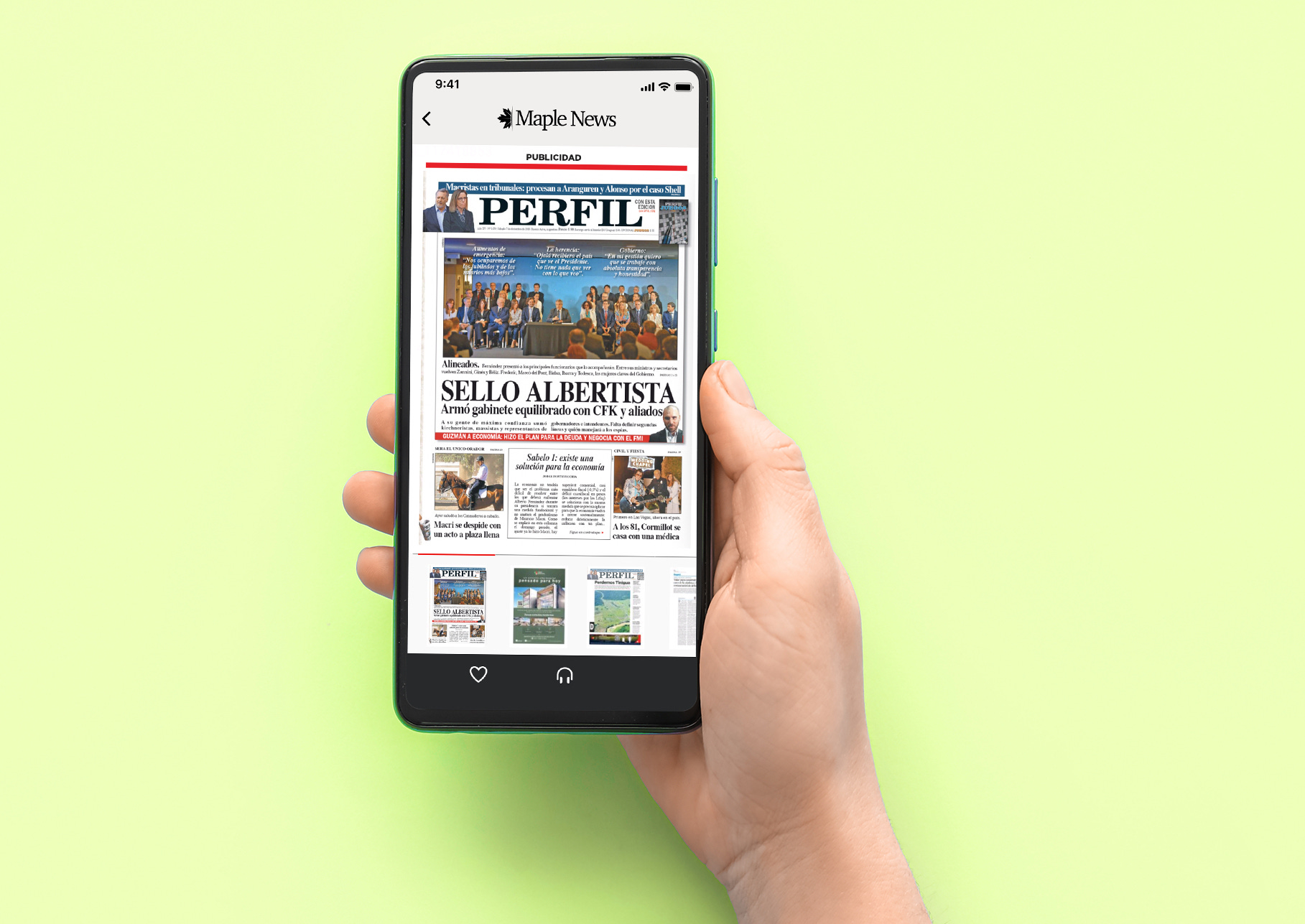
Taken together, these changes are intended to move the product closer to a full mobile news app rather than a standalone replica experience. The aim, he says, is to “bring those editions up to modern expectations”.
For readers, the change is less about a fundamentally new experience and more about usability. Content is formatted for different devices, navigation is more intuitive, and features such as audio extend how that content can be consumed.
In short, the focus is now less on where the replica is read, and more on how it behaves, particularly on mobile, where expectations around navigation, audio and content formats are higher.
Speed, Simplicity and Low Effort
Editions+ is built to accelerate time-to-market, reducing the time, cost and complexity of launching a high-quality digital product. Yet it provides the support and guidance of an in-house team or premium customisation provider.
Instead of requiring publishers to invest in product, engineering and ongoing development, Editions+ is designed to sit on top of existing workflows, allowing teams to focus on content, audience growth and revenue rather than infrastructure.
“We work to do as little as possible to disrupt their workflow and take care of the hard part on their behalf.” — Evan Morse
The performance case for Editions+ is centred on usage. Morse points to data showing that sessions on apps are typically five times longer than on the web, with e-edition apps seeing four times the screen time of alternatives. Push notifications increase usage by almost 40%, while text-to-speech accounts for 8% of content engagement and around a quarter of total session time.
These shifts point to a more app-like experience, but represent an evolution rather than a wholesale change in product strategy.
Revenue and Reach
Morse also points to enhanced revenue opportunities, including advertising within the edition, banner and interstitial ads, in-app purchases and tiered subscription models. The proposition is straightforward: generate more value from content already being produced.
One example he singles out is the world’s oldest Sunday newspaper and digital newsbrand, The Observer, which has used PressReader’s tech inside its own website to enhance its replica edition and reported growth of 17,000 paid subscribers in the first two months.
He adds that Editions+ is positioned as a way to extend access to international audiences, particularly through translation, which expands potential reach into new markets.
What “Turnkey” Means in Practice
The appeal of Editions+ rests heavily on its “turnkey” positioning — publishers provide content and brand assets, with additional involvement only required where customisation is needed.
In essence, Editions+ offers a way to get a functioning product live quickly, without requiring a full internal build or ongoing product management.
In this way, Editions+ differs from platforms such as Pugpig, Twipe and PageSuite by delivering comparable, full-featured digital experiences without compromising on speed, budget predictability and levels of support. PressReader’s offering is both narrower and sharper. It starts with the replica and builds on top of it, with a fixed set of features and a managed delivery model designed to get something live quickly with minimal internal effort. The trade-off is control and deep, but time-consuming, customisation.
Bottom Line
Editions+ is less a new product than a repositioning of PressReader’s existing offer towards a more complete mobile news experience.
It is an evolution of the replica model, keeping the core product intact while extending it with features and formats aimed at improving usage and monetisation, especially on small screens. Its strengths are speed and simplicity.
For publishers looking for a practical, low-effort way to improve their digital edition, it offers a new option. For those investing in fully owned, highly customised products, it is unlikely to replace what they are already building.
I miss the 'advert' tag