


AI was still omnipresent on stages and in conversations in Cologne, but the tone was more pragmatic than in previous years. Attendees wanted to discuss trust in autonomous agents, supply path quality, secure use of first-party data and how to protect publisher revenue as zero-click search changes discovery.
AI progresses from experiment to execution

One of the clearest themes was the move from testing to deploying. Mac Sawa, CEO of OnAudience, said the conversations changed quickly. “In many of my conversations, the discussion quickly moved from “how can we use AI?” to something much more practical.” Teams are already using new tools for real-time optimisation, data discovery and audience curation. He expects multi-agent approaches such as Model Context Protocol (MCP) and Agent-to-Agent (A2A) frameworks to become standard parts of the adtech stack as marketers try to decrease the distance between brief and launch.
Speed can only go so far without context, however. Alexander Igelsböck, CEO & Co-Founder of Adverity, said “DMEXCO underlined that the conversation around AI in marketing is now in its practical application era” and that there “was the growing recognition that AI only creates real value when marketers can trust the data and context behind the answers it gives them.”
He continued to say that “marketing data is still fragmented across channels, platforms and teams, and simply connecting that data isn’t enough - AI also needs to understand how metrics relate to one another, what has changed over time and what is happening around them. That means understanding not just the numbers, but the objectives, decisions and external factors that give them meaning, so AI can produce answers that are genuinely informed rather than just confidently wrong.”
Agentic workflows also raised new commercial questions. Natalie Fisher-Brown, RVP EMEA at OpenX, said agency discussions she took part in kept returning to accountability. “If an agent is making decisions, who is ultimately responsible? How much autonomy are we comfortable giving it, and when does a human need to step in?”
Many client contracts don’t yet allow for agentic buying, she noted. She also picked up tension around cost, commenting that “clients hear that AI equals less labour, or that something can be done 50% quicker, and want that reflected in their fees. But the reality is more nuanced. AI might make steps one, two and three quicker, but it also creates a new step four around governance, checking and oversight.”
Her takeaway from these conversations was that, “maybe the benefit isn’t doing exactly the same thing more cheaply, but enabling teams to do better work, make better decisions and drive stronger performance in the same amount of time.”
Trust and supply-path quality become the foundation
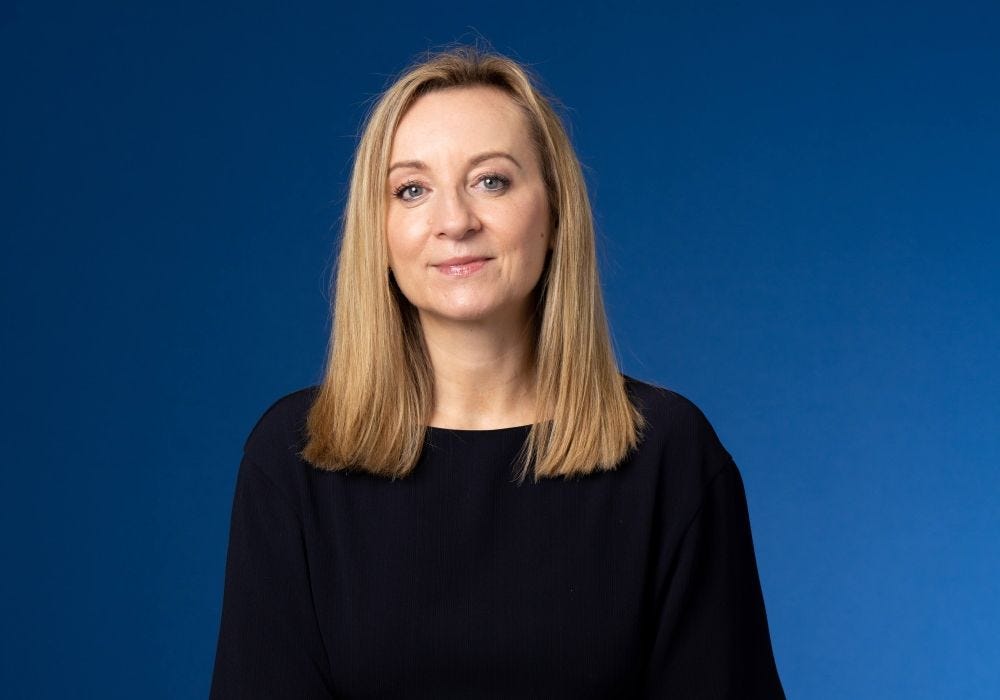
As more buying is automated, the infrastructure underneath has to earn trust. Emma Newman, CRO EMEA at PubMatic, said the discussions at DMEXCO showed the industry should move from asking “what can AI do?” to “what does the ecosystem need to look like if we’re going to trust AI to do it?” When agents trade in milliseconds, the supply path and the signals feeding them matter more than ever.
Robin De Wit, Director of AdTech Partnerships at Refinery89, echoed that view after the event, saying that “agentic buying and selling is still in its infancy” despite the noise around it. AI itself has become business as usual, he noted, so the questions that matter now are who controls the decisioning layer and which intermediaries can provide incremental value.
For publishers, that makes data hygiene a commercial asset rather than a compliance chore. Accurate declared signals and consistent identity will decide who gets included in curated deals and agent-led buying. “Publishers who treat this as an admin task will quietly lose access to demand,” he said. De Wit expects supply-path consolidation to speed up over the next 12 months, with fewer, better-instrumented connections winning out.
Ann Tarasewicz, CEO of Axis Marketplace, took the message from Cologne that “publisher monetisation pressure isn’t going away” and that “low-quality inventory is still widespread, and it shouldn’t be normalised.” She continued to comment that “the industry needs to treat supply-path quality as a performance metric, not a compliance checkbox.” That requires publishers to use data to demonstrate the quality and effectiveness of their inventory and give buyers greater confidence in where their budgets are going.
Data collaboration without giving up control

Getting more from AI also depends on how data is connected. Nick Henthorn, Global Head of InfoSum, Data and Technology Solutions, at WPP, said his conversations at DMEXCO showed that “the advantage will come not from having more data, but from being able to connect high-quality, current signals.”
He saw a clear move away from static, centralised identity frameworks towards decentralised models, where media owners, retailers and brands can use first-party data while keeping control of it. For publishers and other data-rich organisations, “the opportunity extends beyond improving advertising relevance to creating entirely new, high-margin revenue streams.”
Publishers adapt to zero-click search
DMEXCO also offered a realistic picture and some practical ideas for publishers dealing with traffic pressure. Vitor Bellote, VP of Publishers EMEA & LATAM, Seedtag, addressed the rise of AI-driven search and the zero-click behaviour that cuts referral traffic. Forward-thinking publishers are already using it to develop new formats and products faster while building stronger direct relationships with audiences. “The publishers that thrive won’t be those fighting the shift in search, but those using AI to reinvent their value proposition,” he said.
Valentina Pieracci, Global Head of Customer Success Supply, Onetag, said two days of face-to-face conversations at DMEXCO confirmed that “even in an AI-driven industry, human connection has never been more valuable.” Diversification emerged as a clear business priority, she said, as publishers face growing pressure on traffic and monetisation and look to create more value from existing audiences through premium deals, differentiated advertising experiences, video and in-app. She expects that shift to accelerate as audiences spread across apps, CTV and streaming, commenting that “the opportunity for publishers and technology companies will be to follow those audiences across environments.”
Looking ahead
If DMEXCO 2026 showed us anything, it’s that the industry has moved past uncritical AI experimentation. The focus is now on trust, governance, clean signals and sustainable value. For publishers and adtech leaders, success in this phase will depend on how well they strengthen their data foundations, keep supply paths transparent and build direct, high-quality relationships with audiences wherever they are.